Expert Dishwasher Repair in Gloucester, MA
Appliance Repair for Homes & Businesses in Gloucester, Ipswich, Essex, Rockport, Massachusetts and Nearby Areas
Dishwasher Repair in Gloucester, Massachusetts | Appliance Repair Pros
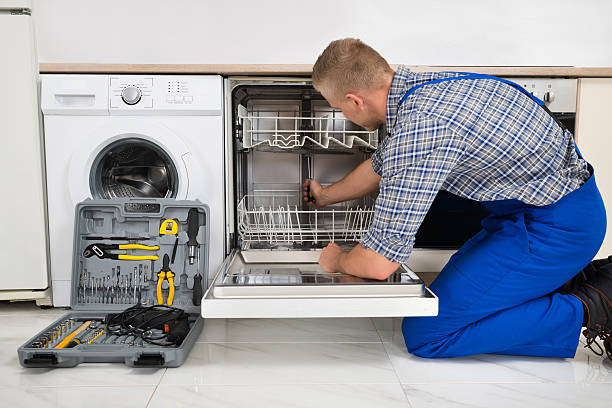
Dishwasher Repair in Gloucester, Massachusetts is a critical service for preserving the sanitation and convenience of your kitchen. When your dishwasher fails it turns a time saving appliance into a source of frustration and clutter. Dirty dishes pile up in the sink and you lose valuable time scrubbing plates by hand after every meal. You need a solution that restores your kitchen routine quickly and effectively. Appliance Repair Pros provides expert diagnostics and repair for homeowners in Gloucester and the surrounding communities of Rockport, Essex, and Ipswich.
We see a wide range of dishwasher malfunctions that disrupt daily life. You might notice your unit leaking water onto the floor or refusing to drain at the end of a cycle. Perhaps the dishes come out gritty and dirty or the machine makes loud grinding noises during operation. In some cases the control panel becomes unresponsive or the door latch fails to engage. We address these issues with a commitment to careful diagnostics and respectful work habits. We treat your home with care and focus on identifying the specific component failure rather than guessing. Whether you live in a historic home near the harbor or a modern condo inland we are ready to help.
Contact us today.
Dishwasher Repair Services in Gloucester
Our team offers a complete range of repair services for all major dishwasher configurations. We understand that modern dishwashers are complex appliances that rely on a precise balance of water temperature, chemical action, and mechanical force. We do not just clear clogs. We inspect the entire system to ensure your unit cleans and sanitizes effectively. Homeowners in Gloucester trust us to handle both standard repairs and complex electrical troubleshooting.
Dishwasher systems we work on
- Built in under counter units
- Integrated and panel ready models
- Drawer style dishwashers
- Portable and convertible units
- Stainless steel tub models
- Plastic tub models
- Smart dishwashers with Wi-Fi connectivity
- Compact and apartment size units
What makes dishwasher repair tricky
- Turbidity sensors that measure soil levels
- Electronic control boards with complex logic
- Diverter motors that switch water flow between arms
- Hidden heating elements and flow through heaters
- Door latch switches and safety interlocks
- Variable speed circulation pumps
- Condensation drying systems versus heating elements
- Water inlet valves and flood protection floats
Common Dishwasher Problems We Fix
Dishwashers often display specific symptoms that point to underlying mechanical or electrical failures. We have organized the most frequent issues we encounter to help you understand what might be happening inside your appliance.
Dishes Coming Out Dirty or Gritty
The primary purpose of a dishwasher is to clean but often homeowners find grit, food particles, or residue left on plates and glasses. This defeats the purpose of running the machine. The issue usually stems from poor water circulation or low water temperature which prevents the detergent from activating properly. It can also be the result of mechanical obstructions preventing the spray arms from rotating.
Likely causes
- Clogged holes in the spray arms
- Broken or worn chopper blade assembly
- Failed circulation pump impeller
- Debris trapped in the filter screen
- Detergent dispenser door failing to open
- Water inlet valve not allowing enough water in
- Diverter motor failure
How we diagnose it
We start by inspecting the spray arms for cracks or blockages that restrict water flow. We check the filter assembly and the sump area for foreign objects like broken glass or bones. We also test the water temperature to ensure it reaches the necessary 120 to 140 degrees for optimal cleaning. If the mechanical parts look good we listen to the circulation pump to ensure it is generating enough pressure to reach the top rack.
What you can do right now
Check the spray arms to ensure they spin freely and are not blocked by tall dishes. Remove and clean the filter at the bottom of the tub to improve water flow.
Dishwasher Not Draining Water
Finding a pool of gray water at the bottom of your dishwasher after the cycle ends is a common and unpleasant problem. This standing water can lead to foul odors and bacterial growth. It indicates that the dirty water is not being pumped out of the unit effectively. This is often a plumbing or pump issue rather than a control failure but it requires immediate attention to prevent leaks.
Likely causes
- Blockage in the drain hose or air gap
- Clogged drain pump filter
- Failed drain pump motor
- Broken impeller fins
- Check valve stuck closed
- Knockout plug left in a new garbage disposal
- Electronic control not sending power to the pump
How we diagnose it
We listen for the hum of the drain pump during the drain cycle. If the pump runs but water does not move we look for physical blockages in the hose or the air gap on your sink. We check the check valve which prevents dirty water from flowing back into the unit. If the pump is silent we use a multimeter to check for voltage at the pump terminals to determine if the issue is the motor or the control board.
What you can do right now
Check your kitchen sink drain to ensure it is clear. If you have an air gap cylinder on the sink counter check it for debris. Inspect the filter inside the dishwasher for major obstructions.
Leaking Water onto the Floor
Water leaks can cause significant damage to your kitchen flooring and cabinetry. A leaking dishwasher may drip slowly causing hidden rot or pour water out rapidly during a cycle. Leaks can originate from the door area, the bottom of the unit, or the water supply connections. Identifying the exact source is crucial to preventing recurring damage.
Likely causes
- Worn or torn door gasket seal
- Loose or cracked water inlet valve
- Leaking pump seal or motor shaft
- Crack in the plastic tub
- Float switch stuck in the down position
- Using the wrong type of detergent creating suds
- Loose hose clamps on internal plumbing
How we diagnose it
We remove the kick plate at the bottom of the unit and run a test cycle while observing with a flashlight. We look for drips at the water inlet valve and the motor assembly. We inspect the door seal for rips, tears, or mineral buildup that prevents a tight seal. We also check the leveling legs to ensure the unit is not tilting forward which can cause water to slosh over the front lip of the tub.
What you can do right now
Check the door seal for debris and wipe it clean. Ensure you are using automatic dishwasher detergent and not regular dish soap. If the leak is active turn off the water supply valve under the sink.
Dishwasher Won’t Start or Power On
A dishwasher that appears dead or unresponsive is a major inconvenience. You may press the start button and see lights but hear nothing or see no lights at all. This issue can range from a simple power supply problem to a complex failure of the main control board or user interface.
Likely causes
- Tripped circuit breaker or blown fuse
- Defective door latch or door switch
- Blown thermal fuse in the control panel
- Faulty main control board
- Damaged user interface or touchpad
- Loose wiring connections
- Child lock feature accidentally engaged
How we diagnose it
We verify power at the wall outlet first. Then we test the continuity of the door switches because the unit will not start if it thinks the door is open. We inspect the thermal fuse which is a safety device designed to cut power if the unit overheats. If these safety components pass testing we examine the main control board and the ribbon cables connecting the touchpad to the processor.
What you can do right now
Check your home circuit breaker panel to see if the switch has tripped. Ensure the door is latched firmly. Check if the “Child Lock” or “Control Lock” light is illuminated on the panel.
Loud or Unusual Noises
Dishwashers emit a hum while running but grinding, banging, or squealing sounds are not normal. These noises indicate that a moving part is failing or that a foreign object is interfering with the wash system. Ignoring these sounds can lead to more severe damage to the motor or the pump housing.
Likely causes
- Hard object like a bone or glass in the chopper
- Worn wash pump bearings
- Drain pump obstruction
- Spray arm hitting dishes or the rack
- Loose impeller wobbling on the shaft
- Defective water inlet valve causing water hammer
How we diagnose it
We listen to the timing of the noise. A noise during the wash cycle points to the circulation pump or spray arms. A noise during the drain cycle points to the drain pump. We inspect the chopper assembly and the pump housing for debris. We also check the spray arms for play or wobble that might cause them to strike the dishes or the tub walls.
What you can do right now
Open the unit and spin the spray arms by hand to see if they hit anything. Check the bottom of the tub for loose utensils or hard debris.
Dishes Not Drying
Opening the dishwasher to find dripping wet plates is frustrating and often requires you to dry everything by hand before putting it away. Modern dishwashers use various methods to dry dishes including condensation drying and heating elements. When these systems fail moisture remains trapped on the dishware.
Likely causes
- Burned out heating element
- Malfunctioning vent wax motor or fan
- Empty rinse aid dispenser
- Thermostat or high limit switch failure
- Control board relay failure
- Loading plastic items that do not retain heat
How we diagnose it
We test the heating element for continuity to ensure it can generate heat. We inspect the vent assembly to make sure it opens correctly to release humid air. We also check the rinse aid dispenser to verify it is releasing the agent which helps water sheet off surfaces. On newer models we check the fan motor that circulates air during the dry cycle.
What you can do right now
Refill the rinse aid dispenser. Try using the “Sanitize” or “Extra Dry” setting to increase the final rinse temperature.
Long Wash Cycles
If your dishwasher runs for three or four hours it may be struggling to reach the correct conditions to advance the timer. Most modern units are sensor driven and will extend the cycle if they detect dirty water or low temperatures.
Likely causes
- Dirty or faulty turbidity sensor
- Low incoming water temperature
- Heating element unable to heat water
- Clogged filters restricting water flow
- Thermostat failure
- Siphoning of water down the drain
How we diagnose it
We test the water temperature sensor and the turbidity sensor which measures water clarity. We check the resistance of the heater to ensure it can raise the water temperature efficiently. We also inspect the installation of the drain hose to ensure water is not siphoning out while the machine tries to fill.
What you can do right now
Run the hot water at your kitchen sink before starting the dishwasher to ensure hot water enters the unit immediately. Clean the sensors and filters.
Foul Odors Coming from the Unit
A clean appliance should not smell bad. If your dishwasher emits a sewage or rotting food odor it indicates bacterial buildup or a drainage issue. This smell can transfer to your dishes and make the kitchen unpleasant.
Likely causes
- Food debris trapped in the filter or door seal
- Grease and soap scum buildup in the sump
- Improper drain hose installation (no high loop)
- Standing water in the bottom of the tub
- Mold growth in the damp environment
How we diagnose it
We inspect the entire drainage system for standing water and organic buildup. We check the installation of the drain hose under the sink to ensure it has a high loop or air gap which prevents sink water from flowing back into the dishwasher. We also inspect the door gasket folds where mold often hides.
What you can do right now
Clean the filter screen thoroughly. Wipe down the door gasket and the bottom lip of the door. Run a cycle with a dishwasher cleaner or a cup of white vinegar.
Safety Notes for Dishwasher Issues
Dishwashers combine electricity, heat, and water which creates unique safety risks when a malfunction occurs. It is important to treat these issues with caution to protect your home and your family. If you notice signs of danger please stop using the appliance and contact a professional.
If you see active leaking do this first
- Turn off the dishwasher immediately to stop the pump.
- Locate the water shut off valve, usually under the kitchen sink, and turn it clockwise to cut the water supply.
- Soak up standing water to prevent slip hazards and damage to subflooring.
- Do not walk through standing water if the appliance is still plugged in or running.
If you see smoke or smell burning do this first
- Do not open the dishwasher door immediately as this can feed oxygen to a potential fire.
- Turn off the circuit breaker that controls the dishwasher at your electrical panel.
- Wait for the unit to cool down completely before inspecting.
- Burning smells often indicate failing electrical components or wiring and require professional inspection before power is restored.
Brands We Service for Dishwasher Repair in Gloucester
Different manufacturers use distinct engineering philosophies for their dishwashers. Diagnosing a German engineered Bosch requires a different approach than working on an American made Whirlpool. Our technicians are trained on the specific mechanical and electronic designs of all major brands found in Gloucester homes.
Whirlpool family and similar designs (Whirlpool, Maytag, KitchenAid, Amana)
These brands are common in many households and share many internal components. They are known for their effective filtration systems and food chopper assemblies. Older models typically used a hard food disposer while newer models focus on quiet filtration.
Common issues we see with these models
- Circulation pump motor failure
- Control board relay failure causing no heat
- Broken rack adjusters and wheels
- Door latch assembly breaking
- Diverter motor leaking
- Chopper blade stripping out
Correct diagnosis is vital here because symptoms often mimic each other. For example a clogged filter can look like a pump failure. We know how to test the specific motors and sensors these brands use.
GE family (GE, Hotpoint, and related lines)
GE dishwashers often use a different pump structure and are known for their hard food disposer systems found in the Piranha line. They also utilize specific control logic that can be sensitive to power surges. The wash arms and water tower assemblies in GE units have unique designs that require careful inspection.
Common issues we see with these models
- Solenoid valve failures causing drain issues
- Control panel buttons becoming unresponsive
- Flood float switch getting stuck
- Heating element burnout
- Electronic control board resetting
We understand the wiring diagrams and diagnostic modes specific to GE units which allows us to pinpoint whether an issue is a simple switch or a main board failure.
Samsung and LG
These brands integrate high tech features and often use very different mechanical designs. LG is famous for its Direct Drive motors which eliminate belts and pulleys while Samsung uses specific water wall technology in some models. They rely heavily on digital sensors and require advanced electronic troubleshooting.
Common issues we see with these models
- Water leakage sensors triggering error codes
- Drain pump motor electrical faults
- Digital display errors (LE, OE, IE codes)
- Door latch alignment issues
- Case brake assembly clogging
Because these units are heavily computerized swapping parts without testing rarely works. We use the onboard diagnostic computers to read the fault history and test components individually.
Frigidaire and Electrolux
These units are often designed with simplicity and efficiency in mind but have specific failure points related to their heating and draining systems. They often use a plastic tub design in lower end models and stainless in premium ones with different heating requirements for each.
Common issues we see with these models
- Drain pump failing to push water out
- Heating element blistering or breaking
- Door seal leaking at the bottom corners
- Upper spray arm tube disconnecting
- Circulation motor buzzing
We check the heating circuits carefully on these models as heater failure is a frequent cause of poor cleaning performance.
Bosch and Thermador
Bosch sets the standard for quiet operation and uses a unique system without a hard food grinder. They rely on heating water internally rather than an exposed element and use a condensation drying process. Thermador shares similar engineering with premium features.
Common issues we see with these models
- Drain pump blockage due to lack of hard food disposal
- Water inlet valve failing to open
- Control board solder joint failure
- E15 error code indicating water in the base
- Door spring tension failure
These machines have complex “AquaStop” leak protection systems. If the base pan fills with water the unit shuts down. We know how to access and clear these systems without damaging the sensitive sensors.
Understanding Common Dishwasher Error Codes
Modern dishwashers communicate problems through digital error codes. These codes are helpful clues but they are rarely the final answer. They tell you what the computer sees, not necessarily what is broken. Testing is required to confirm the root cause.
- i10, i20, i30 (Frigidaire): These often relate to water intake, draining, or leaks. i30 typically means the overflow protection is active.
- OE / DE (LG): Usually indicates a drain error. The pump might be working but blocked, or the pump itself may be dead.
- LE / 1E (LG/Samsung): Often points to a leak detected or a water supply issue. On some units it indicates a motor error.
- E15 (Bosch): This is the leak protection code. It means water is in the safety pan at the very bottom of the machine.
- E24 / E25 (Bosch): These are drain errors. E24 often suggests a blockage while E25 can mean the pump impeller is jammed.
- F8 E1 (Whirlpool): This generally indicates a “Slow Drain” or “No Drain” condition requiring inspection of the drain path.
- F9 E1 (Whirlpool): This usually signifies a “Long Drain” meaning the unit is taking too long to empty.
- HE / TE (Various): These are heater errors indicating the water is not reaching the target temperature.
Maintenance Tips for Dishwasher Owners in Gloucester
Routine maintenance is the key to avoiding emergency repairs and extending the life of your dishwasher. A few minutes of care each month can improve cleaning performance and prevent odors. Given that homes in Gloucester and Rockport often deal with specific water conditions keeping your machine clean is even more important.
First, clean the filter regularly. Most modern quiet dishwashers have a manual filter at the bottom of the tub that traps large food particles. If this screen becomes clogged water cannot circulate with enough force to clean your dishes. Rinse this filter under hot water once a week. Check the spray arms for clogged nozzles. Mineral deposits from water or small seeds can block these holes. Use a toothpick or a small wire to clear them gently.
Run a cleaning cycle monthly. You can use a commercial dishwasher cleaner or place a bowl of white vinegar on the top rack and run a hot cycle. This helps dissolve mineral buildup and grease that accumulates in the pump and hoses. Wipe down the door seal and the edges of the door where the seal meets the tub. Food residue often collects here and can cause leaks or mold growth over time.
Be mindful of loading. Ensure that tall items like cookie sheets do not block the spray arm rotation. Do not overlap dishes as the water spray needs to reach every surface. Finally, run the hot water at the sink before starting the cycle. This purges cold water from the line and ensures your dishwasher starts with hot water which is crucial for dissolving detergent and activating the chemistry needed to clean.
Service Area for Dishwasher Repair in and Around Gloucester, MA
We are proud to be a local service provider focused on the North Shore. Our technicians travel throughout Gloucester and the immediate surrounding towns to bring reliable appliance repair to your door. We understand the local roads and neighborhoods from the coast to the inland residential areas.
Nearby areas served
- Gloucester
- Rockport
- Essex
- Ipswich
Zip codes we serve
01930, 01931, 01966, 01929, 01938
Frequently Asked Questions
Is it worth repairing a 10 year old dishwasher?
This depends on the condition of the unit and the cost of the repair. If the machine has a stainless steel tub and the repair is minor, fixing it often makes sense. However, if the unit is rusting or the repair cost approaches half the price of a new machine replacement might be the better option. We provide an honest assessment so you can decide.
Why are my glasses coming out cloudy?
Cloudiness is often caused by hard water mineral deposits or permanent etching. If the film wipes off with vinegar it is hard water buildup. This can be resolved by using a rinse aid or a detergent with water softeners. If the damage is permanent etching it is usually caused by using too much detergent with soft water or very hot water.
Do I need to rinse my dishes before loading them?
You should scrape off large food scraps but pre-rinsing is generally unnecessary with modern detergents. Enzymes in the detergent need some food soil to attack to work effectively. Pre-rinsing can actually lead to the detergent attacking the glassware causing etching.
How long does a typical dishwasher repair take?
Most repairs can be completed in a single visit if parts are available. Our technicians carry a stock of common parts like pumps, valves, and switches. Diagnostics usually take 20 to 30 minutes and the repair time varies based on the complexity of the job.
Why does my dishwasher smell like burning plastic?
This usually happens when a plastic item falls through the rack and lands on the heating element. It melts during the drying cycle creating a strong odor. It can also indicate a wiring issue. If you do not see melted plastic on the element turn the unit off and call for service.
What does “sensor wash” mean?
Sensor wash cycles use a turbidity sensor to measure how dirty the water is. The machine adjusts the cycle time and water usage based on this data. If the sensor is dirty or faulty the machine may run too long or not long enough.
Why is there water left in the bottom of my dishwasher?
A small amount of water in the sump area is normal to keep the seals moist. However water covering the filter screen indicates a drainage problem. This could be a clog, a kinked hose, or a pump failure.
Can I find reliable dishwasher repair near me in Gloucester?
Yes, we are based locally and serve Gloucester and the surrounding communities directly. We offer prompt scheduling and professional service for all major dishwasher brands.
Why is my dishwasher leaking from the front?
Front leaks are often caused by a damaged door seal, a loose dispenser latch, or using the wrong soap. Regular dish soap creates excessive suds that push past the seals. Using the correct automatic dishwasher detergent is essential.
Does my dishwasher heat the water or use the house hot water?
Dishwashers connect to the hot water supply but they also have an internal heating element. This element boosts the temperature to roughly 140 degrees for the main wash and final rinse to sanitize and aid in drying.
What happens if the control board fails?
If the control board fails the machine may behave erratically, flash lights, or not turn on at all. The board is the brain of the appliance. Replacing it resolves the logic issues but we always test other components first to ensure an external part didn’t cause the board to short out.
Can a clogged air gap cause draining issues?
Yes, the air gap is a small cylinder on your sink that prevents backflow. If it gets clogged with food debris the dishwasher cannot pump water out. Cleaning the air gap is a simple maintenance step that solves many draining problems.
Conclusion
Appliance Repair Pros is dedicated to keeping your kitchen running efficiently. We offer professional dishwasher repair in Gloucester, Rockport, Essex, and Ipswich, handling everything from leaks to motor failures. Our technicians use a meticulous diagnostic approach to find the root cause of the problem ensuring a reliable fix. Do not let dirty dishes take over your kitchen.
Reach out to us for assistance.